


Cartesi and CTSI token
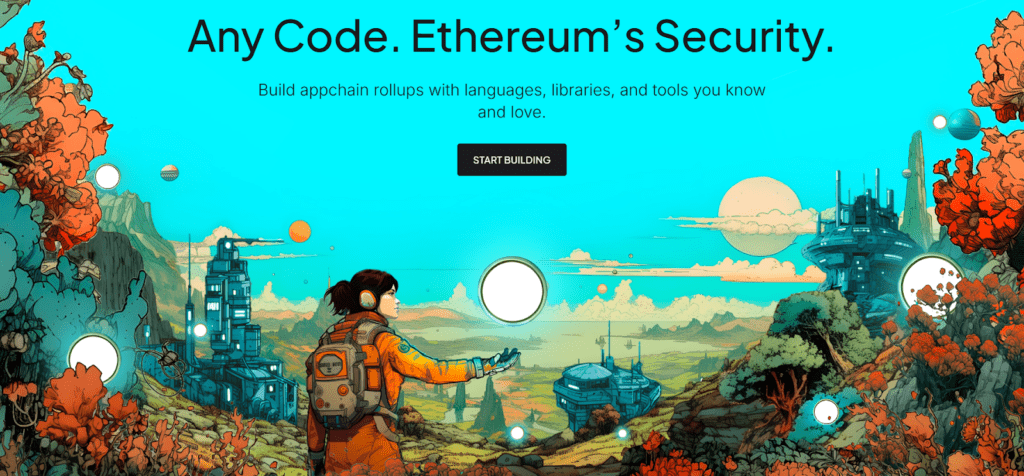
Cartesi is a blockchain infrastructure project focused on helping developers build application-specific rollups with a more familiar software stack. Instead of forcing teams to build everything inside the limits of the EVM, Cartesi lets them use Linux-based environments, broader programming tools, and heavier computation, while still settling with blockchain security.
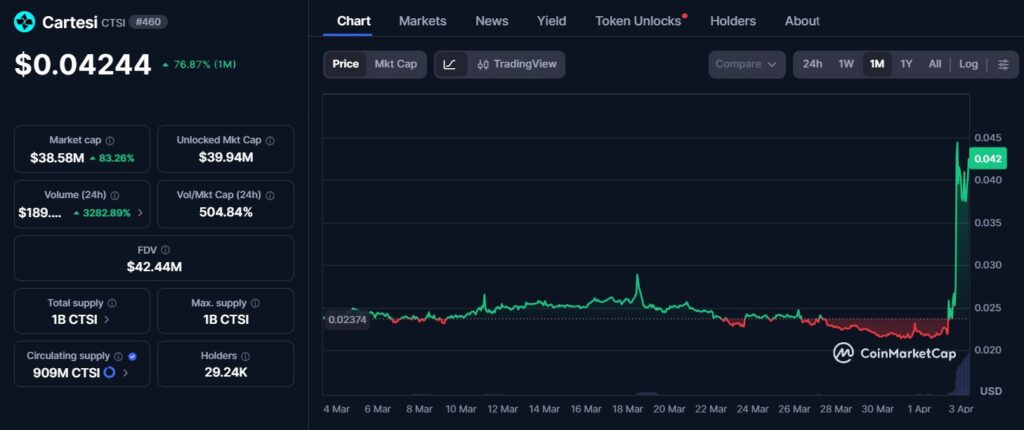
Its token, CTSI, has a fixed total supply of 1 billion. Around 909 million tokens are already in circulation, which means most of the supply is already out in the market. That matters because it reduces the risk of major new dilution from future unlocks.
At the same time, CTSI remains a token with high holder concentration, with the top wallets controlling a large share of supply. That gives the token room for sharp moves in both directions.
Why CTSI Is Going Up Now
Price momentum has been unusually strong
CTSI has posted a sharp move in recent days. Based on the data provided, the token rose roughly 69% in 24 hours, climbing from about $0.0225 to $0.0379 between April 1 and April 2. Over the past week, it was up around 62%.
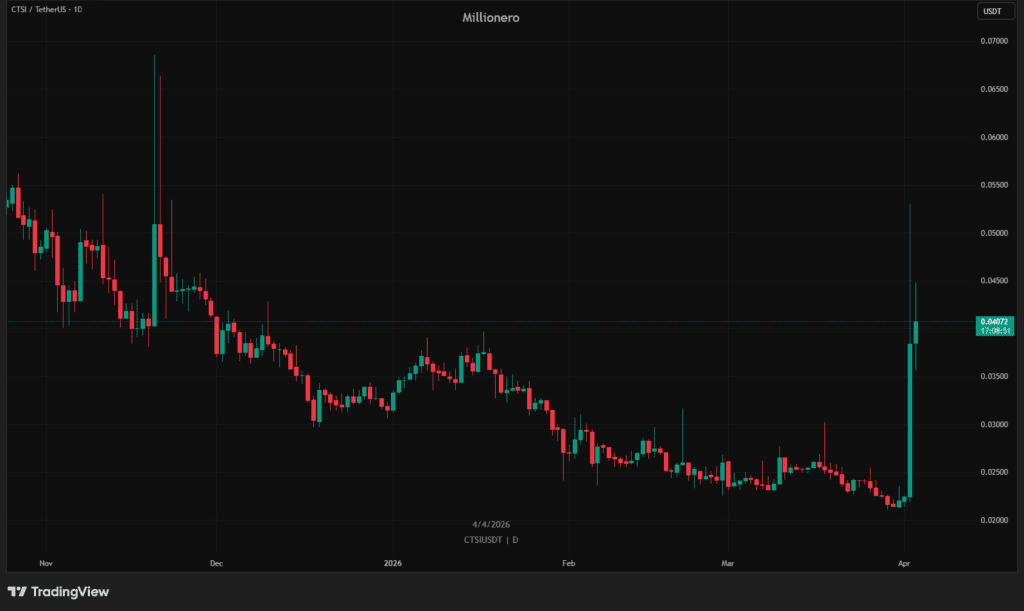
That kind of move usually signals more than just a routine recovery. In CTSI’s case, the rally appears to be supported by a clear rise in trading volume, with activity on major pairs such as CTSI/USDT market increasing materially. When volume expands alongside price, traders often interpret it as a sign that momentum is attracting fresh participation.
There is no single confirmed catalyst
One important point is that there does not appear to be one obvious on-chain event behind the rally. There were no major scheduled token unlocks, and the key vesting periods for the foundation and team are largely behind the project already.
That leaves a few likely explanations:
- Broader crypto market strength lifting smaller-cap altcoins
- Speculative rotation into underfollowed infrastructure tokens
- Low near-term dilution pressure, since most major unlocks are complete
- Renewed attention on projects that offer real development infrastructure, not just meme-driven narratives
In short, CTSI’s current move looks less like a response to one headline and more like a momentum-driven re-rating helped by tighter token supply dynamics.
Finished unlocks are helping the story
A major reason the market may be reacting positively now is that Cartesi’s token overhang is far lower than in earlier phases of the project. The foundation reserve was fully unlocked in 2023, and the final team vesting events were completed in 2024.
That does not remove risk, but it does make the token easier for traders to assess. With most unlock uncertainty gone, the market can focus more on liquidity, positioning, and project execution rather than waiting for new supply to hit.
What Cartesi Is Delivering
A blockchain stack built for heavier applications
Cartesi’s main pitch is straightforward: it wants to make blockchain apps easier to build by letting developers use more traditional software environments.
According to Cartesi’s official material, the project is delivering a framework for app-specific rollups, sometimes called AppChains, that can run more complex logic without pushing all computation directly on-chain. That gives developers a way to build applications that need more processing power while keeping blockchain-based settlement and security.
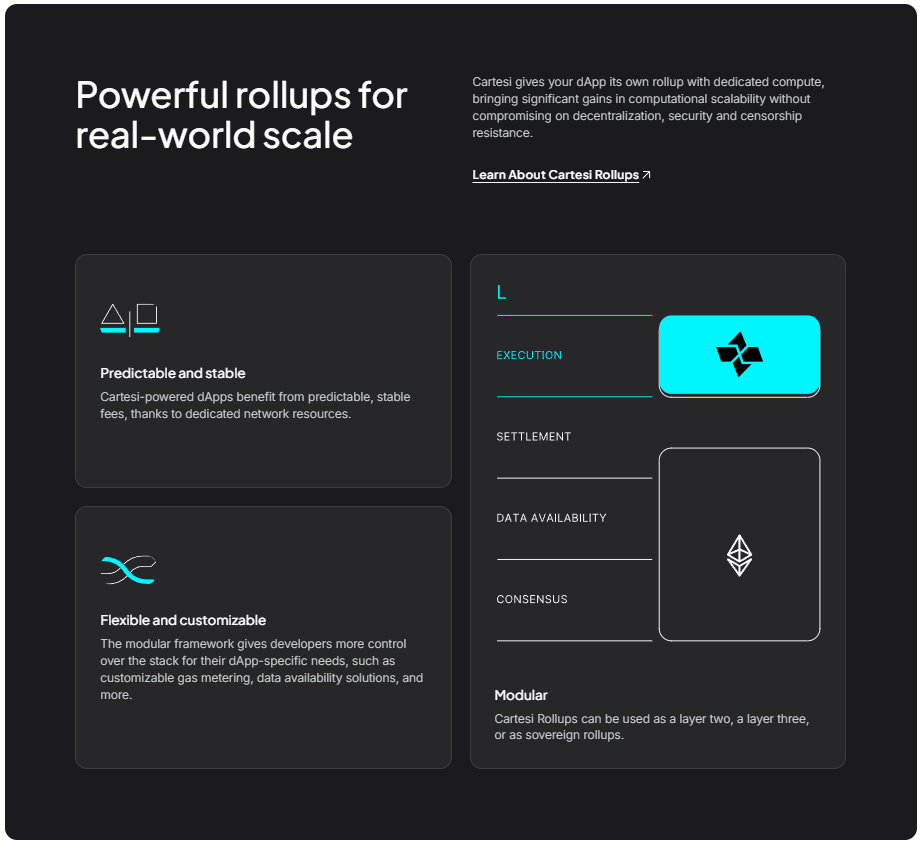
This matters because many decentralized applications run into limits around speed, cost, and computation on general-purpose chains.
Linux, broader tooling, and dedicated compute
What makes Cartesi stand out is its effort to bring Linux and a RISC-V virtual machine into the rollup model. In practical terms, that means developers can work with a wider set of tools, libraries, and programming approaches than they would inside a narrow smart contract environment.
The project says this structure is designed to support:
App-specific rollups
These give each application its own execution environment instead of competing for the same blockspace as every other app.
More customization
Developers can tune parts of the stack around their own needs, including performance and cost trade-offs.
Heavy computation
Cartesi is targeting use cases that are harder to run directly on-chain, including more advanced logic across areas such as gaming, DeFi, and potentially AI-related applications.
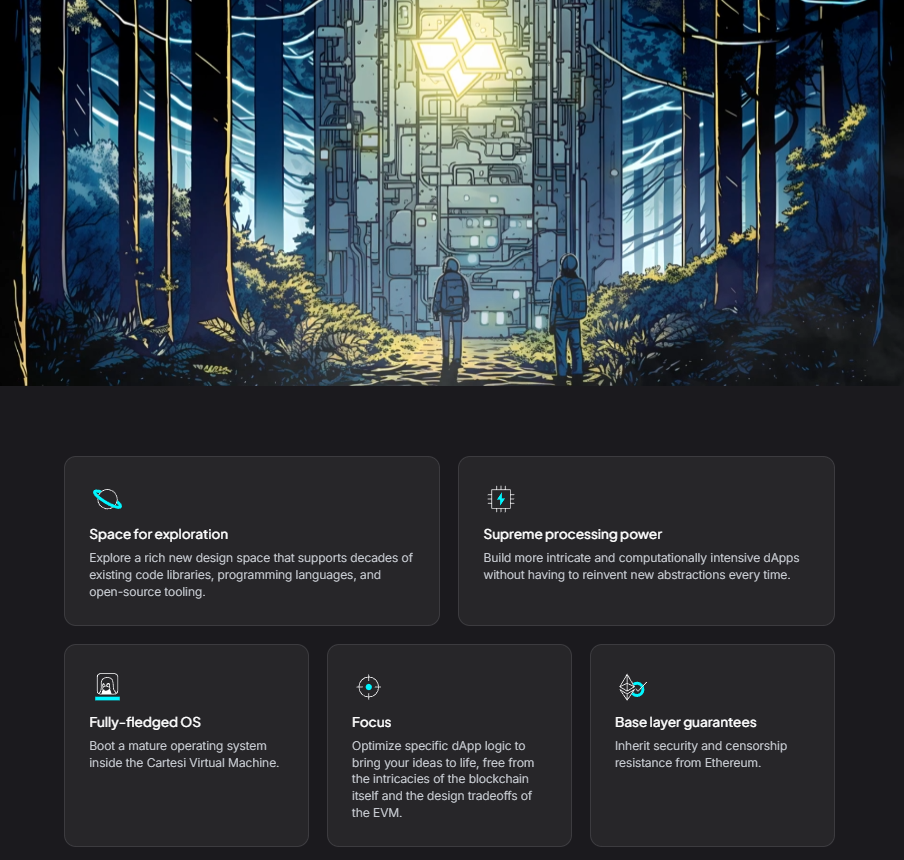
That delivery story is important because the market is increasingly rewarding crypto projects that can point to usable infrastructure rather than only token narratives.
Treasury and staking remain part of the ecosystem picture
Cartesi’s transparency reports also show that the foundation remains active in funding ecosystem work, research and development, operations, and staking-based reward flows. A large share of total CTSI is either in foundation-related wallets or deployed in staking structures.
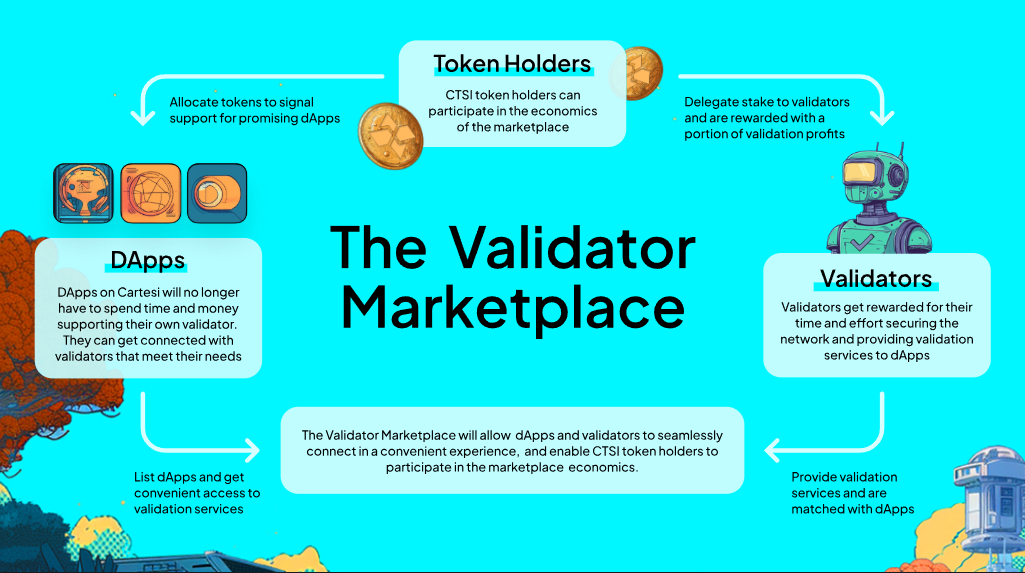
That does not automatically create token upside, but it does show the project is still being run with a visible treasury and an ongoing development budget.
What Investors Should Watch Next
Adoption matters more than the rally
The current move is notable, but the next phase for CTSI will likely depend on whether Cartesi can convert its technical positioning into visible adoption. Traders can chase momentum for a while, but sustained upside usually needs signs that developers are actually building and launching on the stack.
Concentration is still a real risk
The other key issue is holder concentration. A very large portion of CTSI supply sits in a small number of wallets, including foundation-linked addresses, staking-related contracts, exchange wallets, and large unlabeled holders.
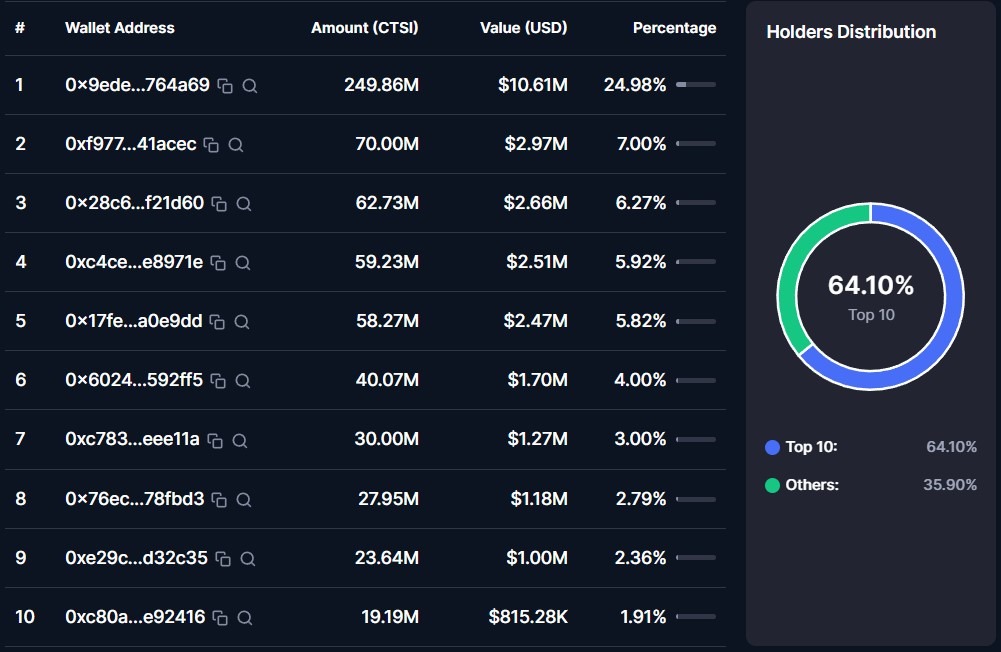
That means the same structure that can help drive sharp upside in a thin move can also create violent downside if large holders begin transferring or selling into exchanges.
Bottom Line
CTSI is rising because the market is rotating back into smaller infrastructure tokens, trading volume has surged, and most major token unlocks are already behind it. That combination creates a cleaner supply story and gives traders a reason to reprice the token quickly.
At the same time, Cartesi’s longer-term case rests on what it is actually delivering: app-specific rollups, Linux-based developer flexibility, and a framework for more complex blockchain applications.
For now, CTSI looks like a token benefiting from both market momentum and a credible product narrative. But to hold those gains, Cartesi will need to show that its infrastructure can attract real builder activity, not just speculative attention.
This article is for general information only and should not be considered financial advice. Crypto markets can be volatile, so readers should do their own research before making any decisions. For more market insights, read our blog, and if you choose to act, trade responsibly on Millionero.