


A Week Where Crypto and Macro Stories Moved Together
This week, we watched crypto markets, regulation, payments, and geopolitics move in the same direction: toward higher tension and faster reactions. On-chain behavior showed large holders repositioning. Regulation became stricter in some areas. Payments infrastructure kept moving toward blockchain rails. At the same time, a major security event on Solana, rising private credit concerns in Washington, and growing Middle East tension added pressure across markets.
The result was a week that felt connected from start to finish. Risk, liquidity, regulation, and adoption all mattered at the same time.
On-Chain Positioning and Whale Activity
Bitcoin wallets split in opposite directions
One of the clearest on-chain developments came from Bitcoin holder behavior. Wallets holding 100 to 1,000 BTC were seen buying, while larger wallets holding 1,000 to 10,000 BTC were selling.
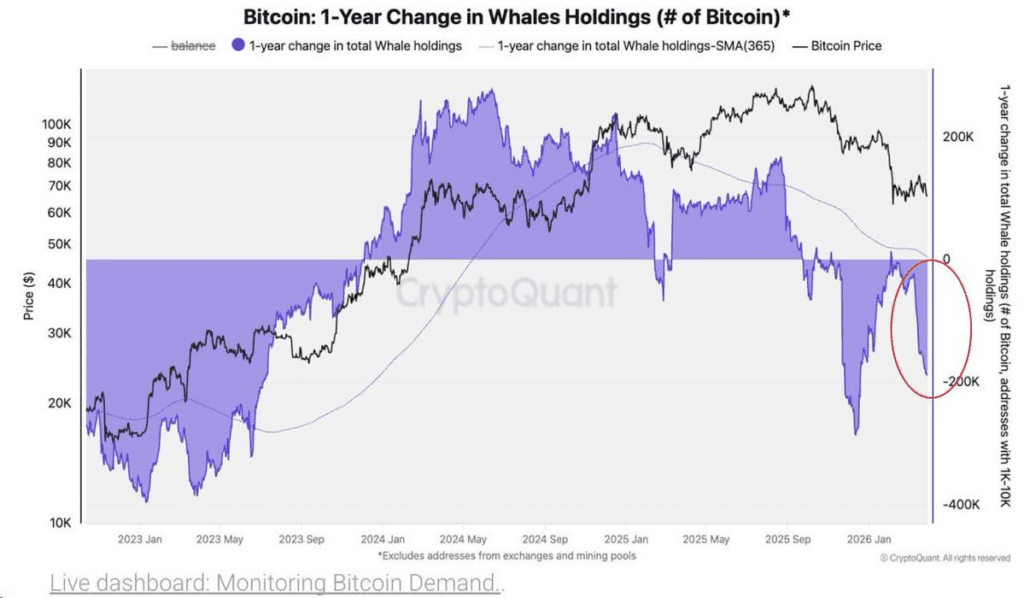
That split matters because it shows the market was not moving with one shared view. Mid-sized large holders were adding exposure, while bigger whales were taking the other side. This kind of divergence often appears when conviction is mixed and the market is trying to decide whether it is entering a stronger move or only passing through a short-term rotation.
Chainlink whales kept accumulating quietly
Another important on-chain signal appeared in Chainlink. In April 2025, there were 100 wallets holding 1 million LINK or more. By April 2026, that number had risen to 125 wallets. That is a 25% increase in one year.
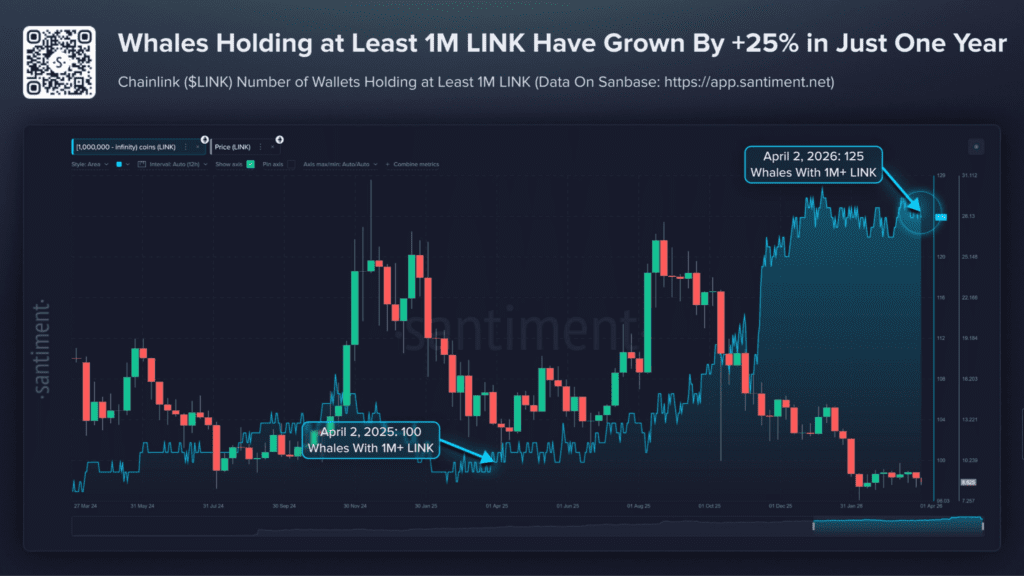
What stood out here was not speed but patience. Even as the broader market shifted and sentiment stayed uneven, large holders continued to gather LINK. It was one of the stronger examples this week of whales building exposure quietly while much of the market stayed focused on louder headlines.
Platform Rules and Regulatory Pressure
Stricter controls arrived for memecoin promotion
This week also brought tighter platform enforcement around memecoin promotion. Accounts with more than 10,000 followers that promote memecoins without a prior crypto track record are now facing stronger scrutiny.
The purpose of the move was clear: to reduce waves of account hacks, phishing, and fraud. That made this more than a simple moderation change. It showed that promotional activity around memecoins is now being treated as a direct risk area, especially when large audiences are involved.
Dubai’s VARA introduced new trading rules
In Dubai, VARA rolled out new rules for crypto markets. The changes include margin requirements, governance rules, and disclosure standards. The framework applies to crypto trading and crypto derivatives.
This was one of the more concrete regulatory developments of the week. It showed that regulators are not only focused on spot activity anymore. They are also tightening oversight around leveraged products, internal controls, and disclosure quality.
Stablecoin policy moved closer to a key compromise
In the United States, discussion around the Clarity Act appeared to move closer to a possible agreement. The main point of friction was stablecoin yield, which had been one of the biggest obstacles in the legislative path.
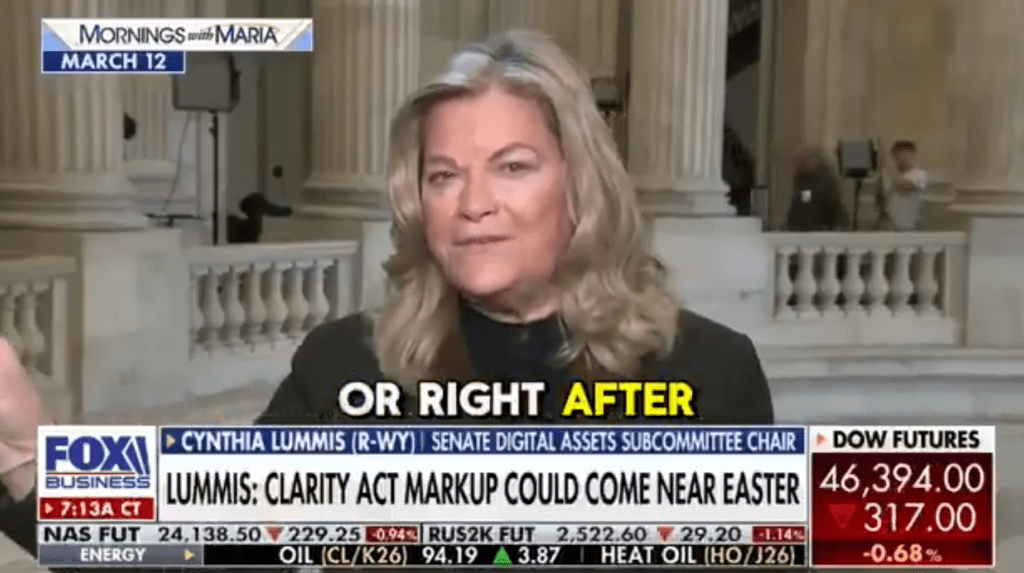
The signal this week suggested progress, but it was also made clear that nothing is official yet. That left the market in a familiar place: watching a potentially important breakthrough, but without final confirmation.
Payments and Tokenized Finance Kept Advancing
Stablecoin payments kept gaining weight in the global system
Another theme this week was the growing role of stablecoin payments in the wider payment landscape. The comparison being made was no longer small. Stablecoin-based payment flows are now being discussed alongside the global payments system in 2025.
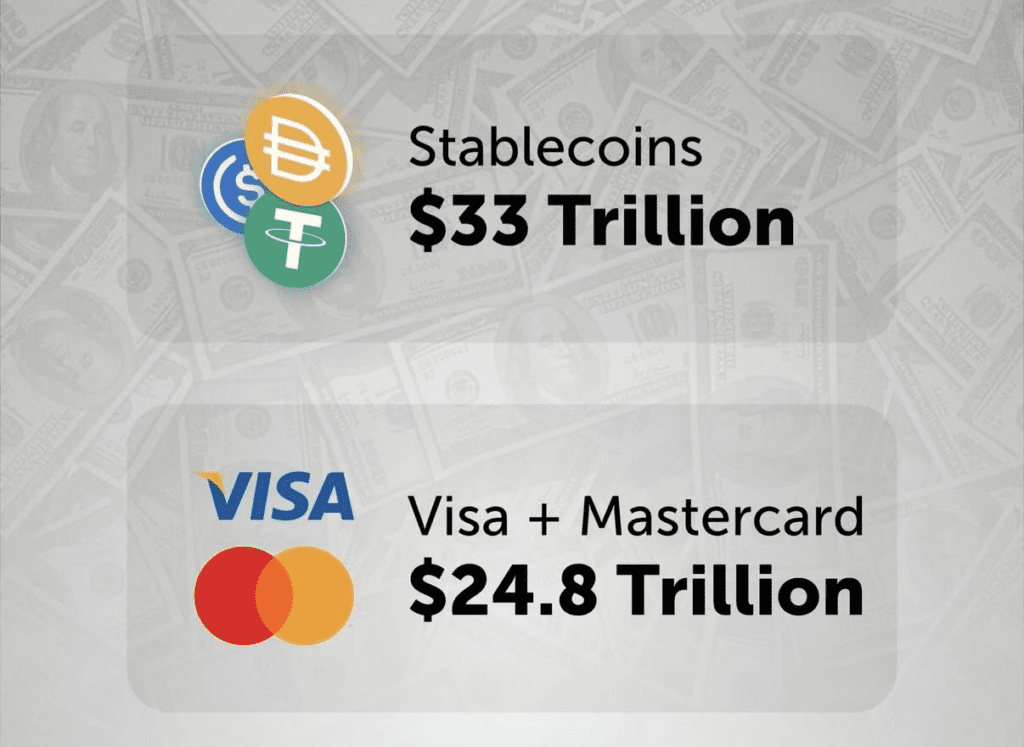
That does not mean the old system is gone. It means the comparison itself is now serious enough to keep coming up. Over time, that changes how the market sees settlement, cross-border transfers, and treasury infrastructure.
JPMorgan and Mitsubishi pushed cross-border settlement forward
A major development in this space came from JPMorgan and Mitsubishi, which launched a blockchain-based settlement system for direct cross-border payments.
The practical change was simple and important: transfers that used to take days could now move in minutes between London, New York, and Singapore. That is the kind of progress that matters because it is easy to understand. Faster settlement is not just a technical story. It changes how money moves between major financial centers.
Ripple and Convera connected blockchain with traditional payment rails
This week also brought a major payments partnership between Ripple and Convera, the global payments company that came out of Western Union Business Solutions.
The focus was on international payments and treasury management supported by stablecoins. The bigger point was the direction of travel. Traditional payment infrastructure and blockchain infrastructure are no longer being treated as separate worlds. They are being tied together step by step.
Solana Had Both Institutional Progress and a Major Security Shock
A major Solana DeFi hack hit DriftProtocol
The most serious crypto security story of the week came from Solana DeFi. DriftProtocol suffered a hack initially described as being worth more than $220 million. Its token then fell 30% in minutes.
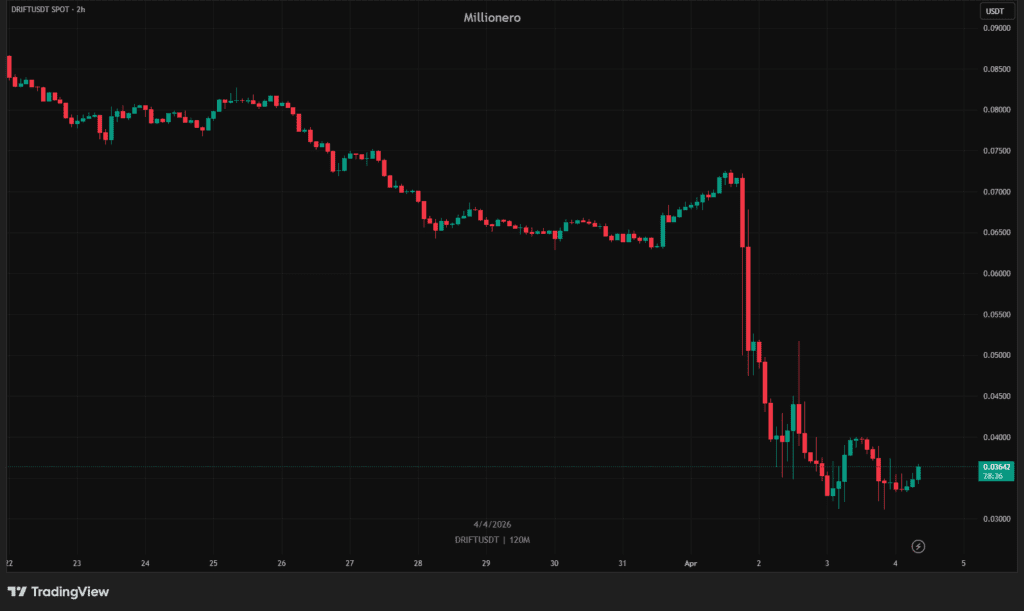
At that stage, the event was already being described as the biggest DeFi hack on Solana since Wormhole. But the story did not stop there.
The damage widened as more projects were pulled in
As the week continued, the number of affected projects rose from 11 to 20, and the total impact climbed above $285 million.
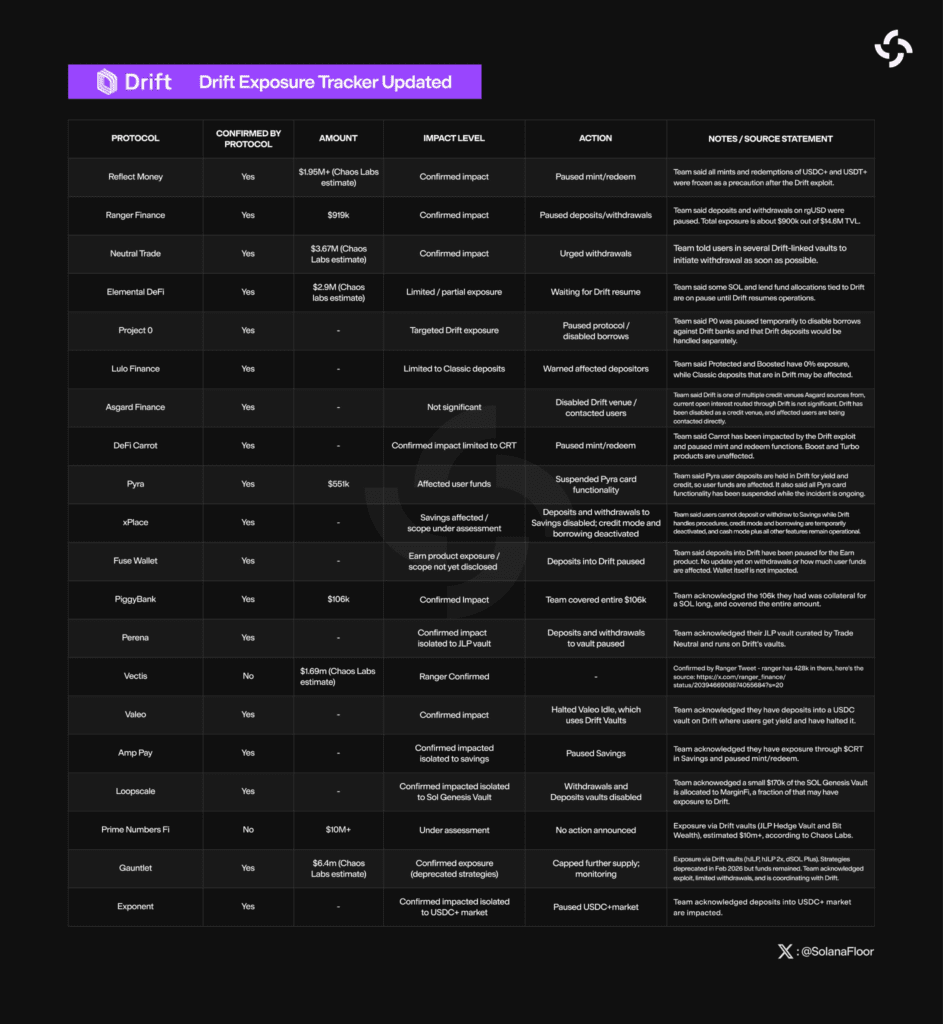
That shift mattered because it changed the story from a large single exploit into a broader ecosystem event. It showed how quickly one exploit can spread stress across connected projects, especially in fast-moving DeFi systems where dependencies are often deeper than they first appear.
Solana still received an institutional vote of confidence
Even with that hack dominating part of the week, Solana also received an important institutional signal. B2C2, the trading arm of SBI Holdings, chose Solana as the main network for stablecoins used by institutional clients.
The logic behind the choice was straightforward: speed, lower fees, and growing institutional trust. That created a sharp contrast inside the same week. On one side, Solana DeFi faced one of its biggest shocks since Wormhole. On the other, institutional players still moved toward the network for core settlement use.
Broader Market Stress and the Search for Risk
A Buffett-style view said the pullback was still too small
One market view this week argued that the current decline still does not look like a true historic buying opportunity. By that reading, markets were only around 5% to 6% cheaper, which is still far from the kind of deep collapse usually linked to major long-term entry points.
The message was blunt: this pullback is still small by the standards of real market panics. That view helped explain why some large players may still be waiting rather than treating current weakness as a once-in-years opportunity.
Liquidations showed how fast fear was building
That caution was reflected in derivatives markets as well. Over 24 hours, liquidations crossed $414 million.
The move captured the tone of the week. The market was already struggling with hack fallout, regulatory change, and macro uncertainty. Once geopolitical pressure intensified, the red spread quickly across screens.
Washington Raised a Warning About Private Credit
The concern was not routine
Away from crypto, one of the most serious financial system stories came from Washington. The U.S. Treasury called together domestic and international regulators to discuss the risks building in private credit.
The concern was centered on billions of dollars in retirement savings moving quietly into illiquid credit products. At the same time, firms such as Apollo and KKR have bought insurance companies to gain more direct access to assets and capital.
Cross-border links are making the system more complex
This week’s warning also focused on how reinsurance and cross-border financial connections are tying the system together more tightly. When large flows move through insurers, funds, and global credit structures, the risk no longer stays local.
That was the main point: state-level regulation is no longer enough when the system is linked across borders and connected to very large pools of capital. The signal from Washington was not presented like a routine meeting. It looked much more like a real warning that risk is building in places that remain hard to price clearly.
Geopolitics Drove Oil, Market Fear, and Policy Signals
Oil pushed toward levels not seen in years
Middle East tension remained one of the biggest forces in the market this week. Crude oil moved toward its highest closing level since June 2022, as the rising conflict involving Iran pushed prices toward levels not seen in more than three years.
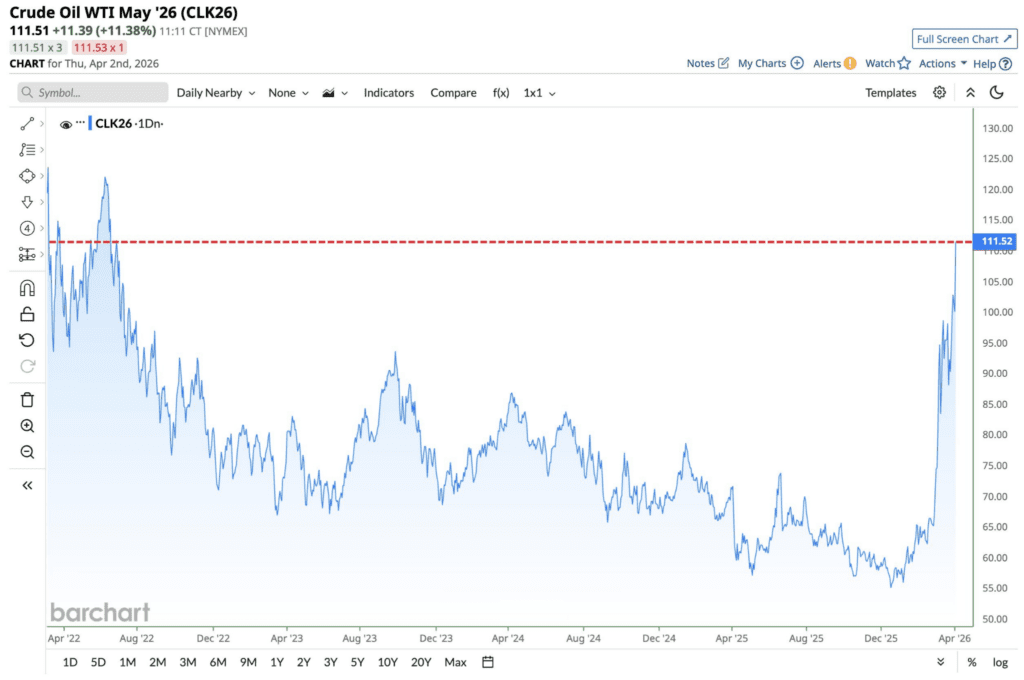
This was one of the clearest examples of macro pressure feeding directly into market sentiment. Higher oil prices quickly became part of the broader risk story.
War rhetoric escalated sharply
The language around the conflict also intensified. Discussion turned to the possibility that the U.S. military could move against additional targets in Iran, including infrastructure such as power facilities and bridges.
On the Iranian side, the response was framed in openly confrontational terms. One line said 7 million Iranians were ready to join the fight against the United States and Israel. Another message argued that if outside forces came into Iran’s home, they would face the whole nation. Separate rhetoric from the IRGC also escalated sharply, warning that opposing soldiers would be carried to their graves and framing the confrontation as one between a 6,000-year-old civilization and a 250-year-old state.
Trump’s war messaging shaped the market tone
A separate summary of Trump’s latest war comments added to that atmosphere. The message said the conflict could be brought to an end within three weeks, described Iran’s naval and missile capabilities as heavily damaged, left room for more limited spot hits if needed, and tied the wider situation to the Strait of Hormuz, shipping security, and energy pricing.
At the same time, oil was described as being near $103 a barrel. That price level turned the geopolitical story into a direct market story.
Britain tried to draw a line
In Britain, Keir Starmer made it clear that the Middle East war is not Britain’s war and that London should not be pulled into it. At the same time, there was still an effort to keep diplomatic tracks open.
That message was matched by another warning: securing the Strait of Hormuz would not be simple. So even where there was a push for distance and diplomacy, the strategic importance of the route remained central.
A White House address was put on the schedule
Another political detail that mattered this week was the announcement of a direct White House address on the Iran war, scheduled for Wednesday at 9:00 PM New York time.
That kind of timing notice does not move markets on its own, but it does tell traders that the story is important enough to be managed from the highest level and in real time.
Closing Thoughts
Looking back on the week, I saw a market that kept shifting between adoption and stress. Bitcoin holder groups moved in opposite directions. Chainlink whales kept building. Stablecoins moved deeper into payments and settlement. Solana showed both institutional momentum and serious security weakness. Regulators tightened rules, especially around leverage, disclosure, and memecoin promotion. Washington raised concern about risks outside crypto in private credit. And geopolitics pushed oil, liquidations, and market fear higher.
None of these stories stood alone. That was the real shape of the week. Crypto, traditional finance, regulation, and geopolitics were all feeding into one another, and the market had to price all of it at once.
This weekly recap is for general information only and should not be considered financial advice. Markets can move fast, especially when crypto, macro, and geopolitics collide. Read our blog for more market coverage, and if you decide to act, trade responsibly on Millionero.