


A New Claim Has Pushed Bitcoin’s Oldest Question Back Into Focus
One of crypto’s longest-running mysteries is back in the spotlight. A new New York Times investigation argues that Adam Back, a British cryptographer and the chief executive of Blockstream, is the strongest candidate yet to be the real Satoshi Nakamoto.

The report does not present a final proof, and Adam Back has denied the claim. But the investigation is already important because it comes from a major mainstream outlet, relies on a long trail of historical material, and tries to connect early cryptography research directly to Bitcoin’s design.
That means the story is not just about a name. It is about whether the public may finally be getting closer to understanding who built Bitcoin and how that person’s ideas took shape before the network even existed.
Why the New York Times Focused on Adam Back
The case starts with old cypherpunk history
The New York Times said its investigation took more than a year and involved digging through thousands of old internet posts and early cryptography mailing-list archives. According to the report, that work pointed again and again toward Adam Back.
Back has long been one of the most discussed names in the broader Satoshi debate, but this latest research tries to push the case much further. The core argument is that Back was not just close to the ideas behind Bitcoin. The report argues that he had already developed or discussed many of Bitcoin’s core building blocks years before Bitcoin appeared.
Hashcash is one of the biggest reasons his name stands out
The strongest link is Hashcash, a proof-of-work system created by Adam Back. Proof of work became one of the central mechanisms in Bitcoin, and Hashcash was directly cited in Bitcoin’s white paper.
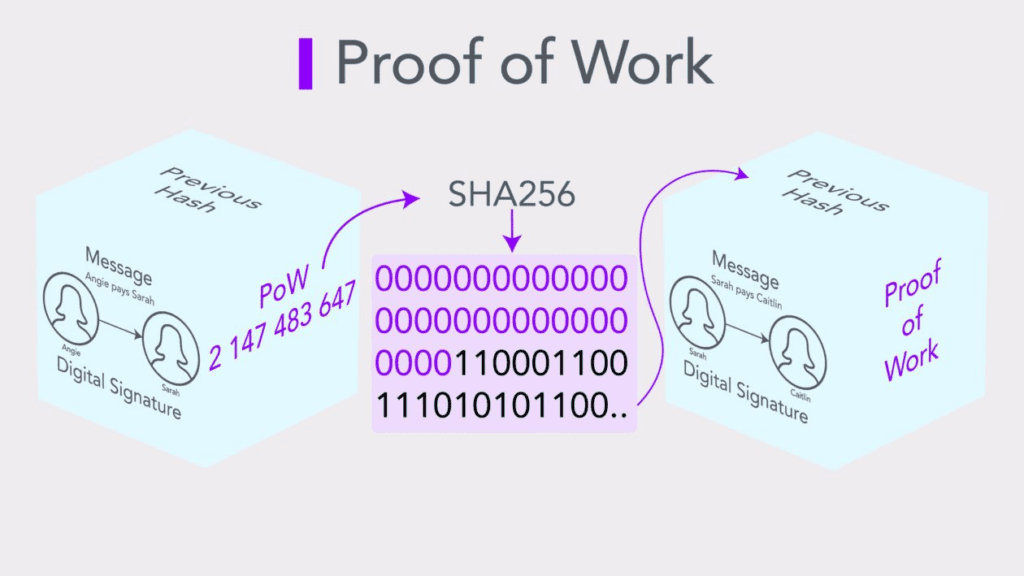
That alone does not prove identity. But it is one reason Back has always stood out from the long list of possible Satoshi candidates. In the New York Times investigation, this earlier work is treated as part of a larger pattern rather than a single coincidence.
What the Research Says It Found
Bitcoin-like ideas appeared in Back’s earlier writing
According to the Times, Back’s older messages on cypherpunk mailing lists included discussions that looked strikingly similar to ideas later used in Bitcoin. The article says he described electronic cash systems, decentralized networks, resistance to shutdown, and ways to reduce reliance on government-controlled financial systems.
The report also pointed to examples where Back and Satoshi appeared to use very similar language or very similar comparisons.
One example involved the contrast between Napster and Gnutella. The Times said Back had previously argued that distributed systems had a better chance of surviving than centralized ones, while Satoshi later made a very similar point when discussing Bitcoin and other peer-to-peer networks.

Adam Back’s 2000 cypherpunks post comparing Napster and Gnutella
Another example involved comments about money and resources. The article said Back had discussed whether a system could still make sense if it wasted fewer resources than fiat money, while Satoshi later made a similar argument about Bitcoin’s energy use compared with conventional banking.
The report also looked at writing style
Another part of the investigation focused on writing patterns. The New York Times said it used computer-assisted reporting and large archives of posts to compare the language used by Satoshi and by early cryptography researchers.
Outside reporting on the story said the work included AI-assisted writing analysis, looking for common habits, phrasing, and small language quirks. Back was presented as the closest match.
This is one of the most talked-about parts of the investigation, but it is also one of the most debated. Writing similarities can be interesting, especially in a narrow technical community, but they are still not the same as direct proof.
Why Adam Back Fits the Profile
His background matches many of the technical requirements
The Times argued that Back’s background fits what many people have long assumed about Satoshi. He is a British cryptographer, deeply connected to the cypherpunk movement, and highly familiar with distributed systems, public-key cryptography, and digital cash research.
The report also said he used the same programming language as Satoshi and had expertise in exactly the kind of network and privacy systems that Bitcoin would require.
In short, the argument is not only that Back helped inspire Bitcoin. It is that he appears to have had the technical range, the ideological alignment, and the timing to build it.
Why the Case Is Still Not Closed
Adam Back has denied being Satoshi
The biggest reason the mystery remains open is simple: Adam Back says he is not Satoshi Nakamoto.
After the article was published, he said the similarities highlighted by the New York Times reflect his early and intense involvement in cryptography, privacy tools, and electronic cash research. In his view, the overlaps come from shared interests, shared language, and shared experience in the same early technical world.
He described the case against him as a mix of coincidence and similarities that would naturally appear among people who were already thinking about the same problems.
Critics say resemblance is not proof
That is the other major weakness in the case. Many early cypherpunks were discussing privacy, decentralized systems, digital money, and anti-censorship tools long before Bitcoin launched. So even if Back’s writing looks close to Satoshi’s writing, that may still reflect a shared intellectual environment rather than identity.
This is why the new research matters, but also why it has not ended the debate. It may have produced the strongest mainstream case yet for Adam Back, but it still does not appear to offer the kind of evidence that would settle the question completely.
Why This Matters for Bitcoin
The mystery has always been bigger than gossip
The identity of Satoshi Nakamoto matters partly because of history, but also because of influence. Whoever created Bitcoin introduced a system that changed the way the world thinks about money, scarcity, and digital ownership.
If the creator were ever confirmed, it would affect how people interpret Bitcoin’s early design, its political roots, and the choices made in its first years.
It also matters because of the coins
There is another reason the mystery remains so powerful: the huge amount of Bitcoin believed to be associated with Satoshi. That stash has become part of Bitcoin lore, and any real confirmation around Satoshi’s identity would immediately raise questions about those holdings, their security, and whether they might ever move.
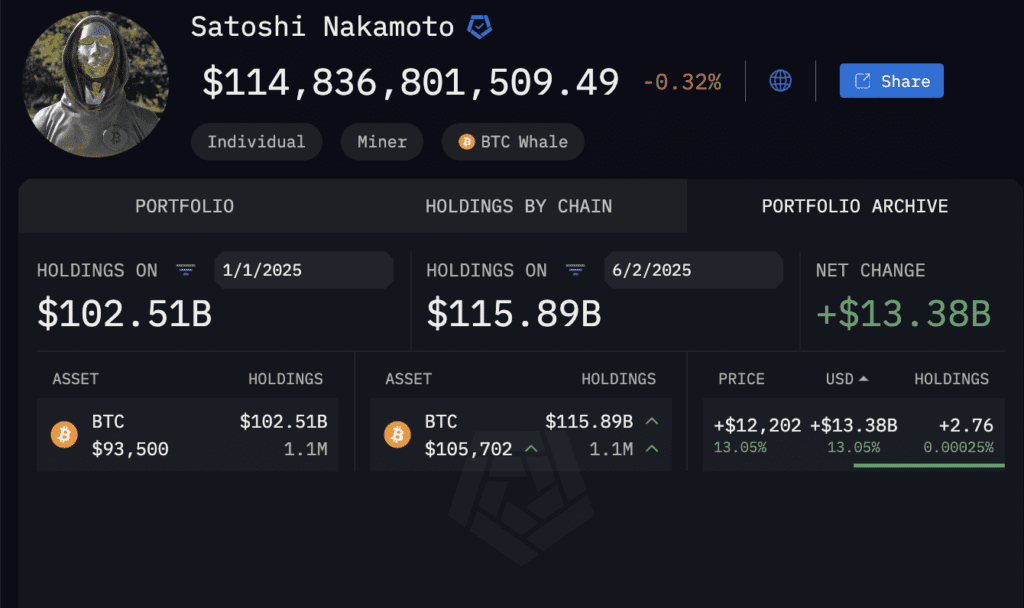
That is one reason every major Satoshi theory attracts so much attention. The story is not only symbolic. It could also have financial and market meaning.
A Mystery That Still Refuses to End
The new New York Times investigation has clearly reopened the Satoshi debate in a serious way. Its case for Adam Back rests on old cypherpunk writings, technical overlap, proof-of-work history, and writing-style similarities. It is a detailed and ambitious attempt to connect the dots behind Bitcoin’s creation.
But for now, the final answer still looks out of reach. Adam Back denies the claim, and the evidence that has been made public still appears to be strongly suggestive rather than conclusive.
That leaves Bitcoin in the same strange place it has occupied for years. The world’s largest cryptocurrency continues to grow, institutions continue to adopt it, and yet the identity of its creator remains one of the internet’s most powerful unresolved mysteries.
This article is for general information only and should not be considered financial advice. Crypto markets can react quickly to major media reports, identity claims, and sentiment shifts. Read our blog for more market coverage, and if you choose to act, trade responsibly on Millionero.