


Crypto enters the real world through pressure. It appears where payment becomes difficult, where banks hesitate, where risk grows expensive, and where old systems move too slowly for urgent trade. Iran’s claimed Bitcoin-backed shipping insurance service, Hormuz Safe, gives that idea a sharper shape. It places Bitcoin beside cargo ships, insurance documents, sanctions pressure, and one of the most sensitive sea routes in global commerce.
Hormuz Safe has been described as a Bitcoin-backed insurance service for shipping companies and cargo owners moving through the Strait of Hormuz and nearby Persian Gulf waters. Reports say Iran believes the program could generate more than $10 billion in revenue. The full details are still developing, but the direction is clear: Iran is trying to connect crypto with the financial layer of maritime trade.
That layer matters. A ship does not move only because it has fuel, a crew, and cargo. It moves because paperwork allows it to move. Insurance supports the journey. Payment rails settle fees. Banks accept the documents. Ports recognize the coverage. Buyers trust that the cargo can arrive without turning into a legal or financial disaster.
This is where Bitcoin enters the story.
The Strait Where Risk Becomes a Price
The Strait of Hormuz is a narrow passage between Iran and Oman. It connects the Persian Gulf to wider global shipping routes. Oil, gas, petrochemicals, and other major goods pass through this corridor, which gives it deep economic and political weight.
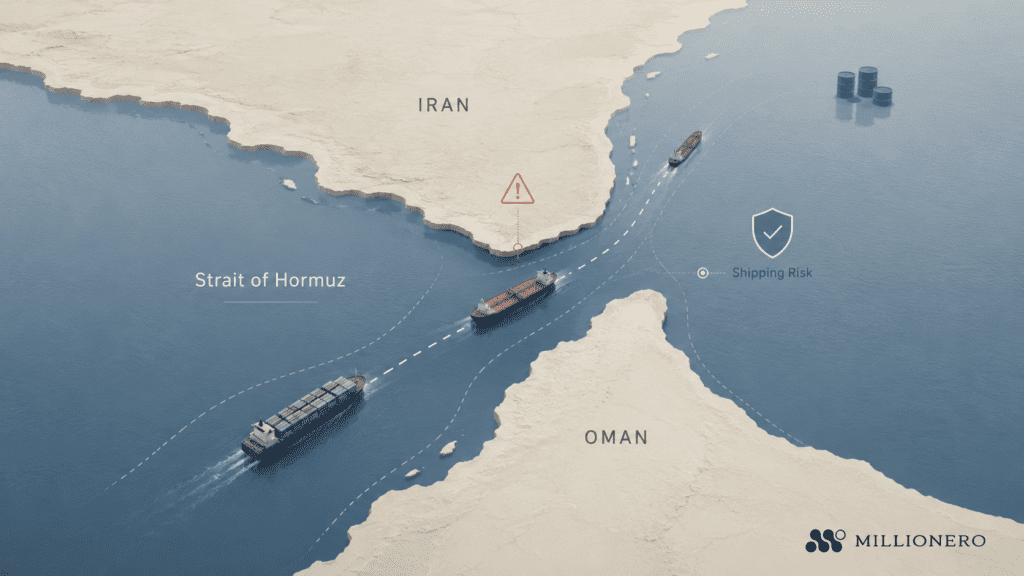
When tension rises around Hormuz, the effect does not stay at sea. Shipping costs move higher. Cargo owners worry about delays. Energy buyers watch supply risk. Insurers increase premiums or reduce coverage. Banks study every transaction more carefully. A narrow route begins to affect contracts, fuel prices, delivery schedules, and market sentiment far beyond the region.
Insurance sits inside that pressure. In risky waters, coverage becomes part of the ship’s commercial permission to travel. Without it, a vessel may still be physically able to sail, but the trade around it can freeze.
Hormuz Safe enters that hidden space. It turns route risk into a financial service and tries to attach Bitcoin to the process.
Why Bitcoin Fits the Problem
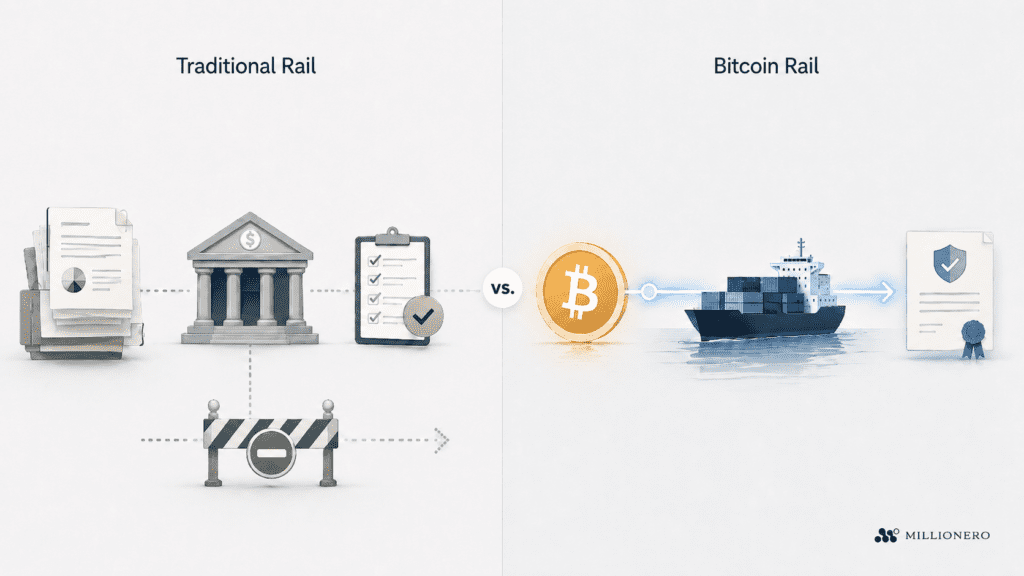
Traditional shipping insurance depends on brokers, underwriters, banks, compliance teams, legal documents, and settlement networks. Much of this system touches Western financial infrastructure. For a sanctioned country, each step can create delay, rejection, or extra cost.
Bitcoin offers a different rail. It can move value across borders without SWIFT, can settle directly between parties. It creates a public record of payment. And it gives the operator another way to collect premiums and issue coverage around a route where political risk already shapes business decisions.
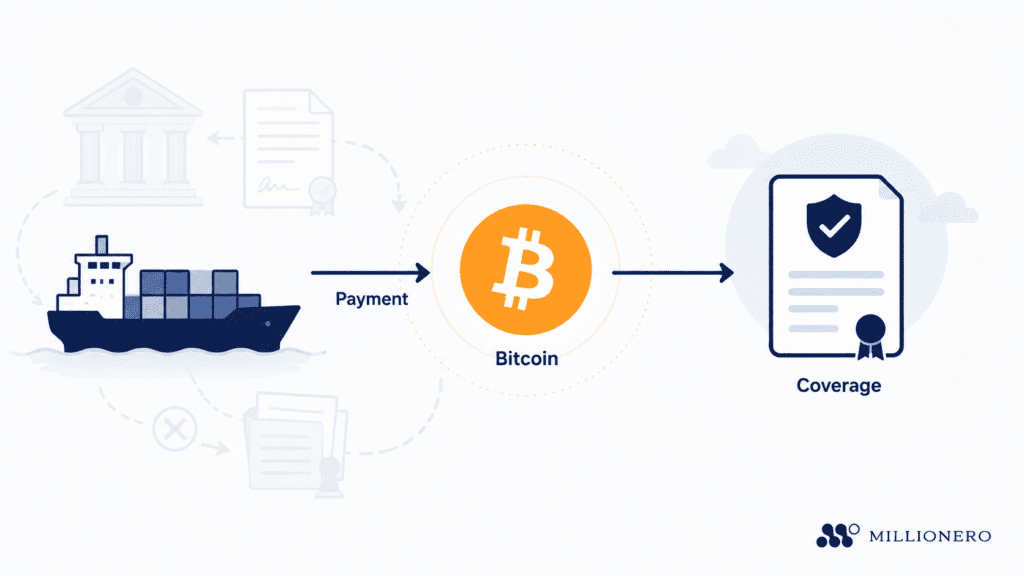
That does not remove legal risk. A Bitcoin transaction can settle quickly, while the company behind that transaction may still face sanctions questions, banking pressure, or commercial consequences. The blockchain can confirm payment. It cannot make every port, bank, insurer, and regulator accept the arrangement.
That tension gives Hormuz Safe its importance. It shows the exact place where crypto and real-world trade meet: payment can become easier while legality, trust, and adoption remain difficult.
Crypto Enters Through Friction
Real-world crypto adoption often begins in uncomfortable places. It begins where normal finance creates a bottleneck. It begins where trade needs movement but the payment system creates resistance. And it begins where settlement, trust, and access become urgent.
Hormuz Safe follows that pattern. A strategic sea route creates risk. Risk creates demand for insurance. Sanctions create payment friction. Bitcoin becomes a possible settlement tool inside that structure.
For Iran, this converts geography into a financial product. The country sits beside one of the world’s most important shipping corridors. A Bitcoin-backed insurance service attempts to turn that position into revenue, influence, and control over the paperwork layer of passage.
For shipping companies, the question is practical. Will the coverage be accepted? Will the payment create legal exposure? And will the certificate satisfy partners, banks, ports, and cargo owners? Will the service reduce risk, or add another layer of uncertainty?
These questions will decide whether Hormuz Safe becomes a working trade tool or remains a narrow solution for a limited group of operators.
The Old Business of Risk Meets Digital Settlement
Maritime trade has always been built around risk. Merchants, shipowners, lenders, and insurers have spent centuries pricing storms, war, piracy, seizure, delay, and loss. Every major trade route carries a history of danger, paperwork, and negotiation.
Hormuz Safe adds Bitcoin to that old system. The result feels modern, but the basic logic is ancient: goods need protection, risk needs a price, and payment needs a path.
That is the deeper lesson for crypto readers. Bitcoin’s role in trade will not always appear through clean product launches, friendly policy, or polished corporate pilots. Sometimes it appears around hard problems, tense borders, blocked rails, and expensive routes.
In this case, Bitcoin is being placed beside ships, cargo, insurance certificates, sanctions pressure, and one of the world’s most watched waterways. The market may watch the price chart, but global trade watches something quieter: who can move goods, who can insure risk, and who can still get paid.
This article is for educational purposes only and should not be taken as financial advice. Always do your own research before making trading decisions. For more crypto market education, trading tools, and simple guides, visit Millionero Exchange and read more on the Millionero Blog.