



Most beginners learn about bull and bear markets after the market has already left a mark on them. The green candles teach confidence first. The red candles teach discipline later.
At the beginning, crypto can look simple. A coin rises, people talk about it, more buyers arrive, and the chart keeps climbing. Then the mood changes. The market that once felt easy becomes slow, heavy, and uncertain. Prices stop recovering quickly. Good news loses strength. Coins that once moved with energy begin to fade.
This is where market cycles matter.
A bull market is a long period when prices generally rise and confidence spreads across the market. A bear market is a long period when prices generally fall, move sideways, or struggle to recover. These cycles shape how traders think, how they manage risk, and how they understand opportunity.
Bitcoin Sets the Market Mood
Bitcoin usually stands at the center of the crypto cycle. Many beginners trade altcoins, meme coins, gaming tokens, AI tokens, or new trending narratives, yet Bitcoin still shapes the environment around them.
When Bitcoin is strong, the whole market often becomes more active. Large altcoins start moving. Then attention spreads into smaller tokens. Traders become more willing to take risk because the market keeps rewarding risk.
When Bitcoin is weak, the mood changes quickly. Altcoins lose strength faster. Smaller tokens become more dangerous. Liquidity becomes thinner, which means fewer buyers and sellers are active. A coin can fall sharply because there are fewer strong bids waiting below the price.
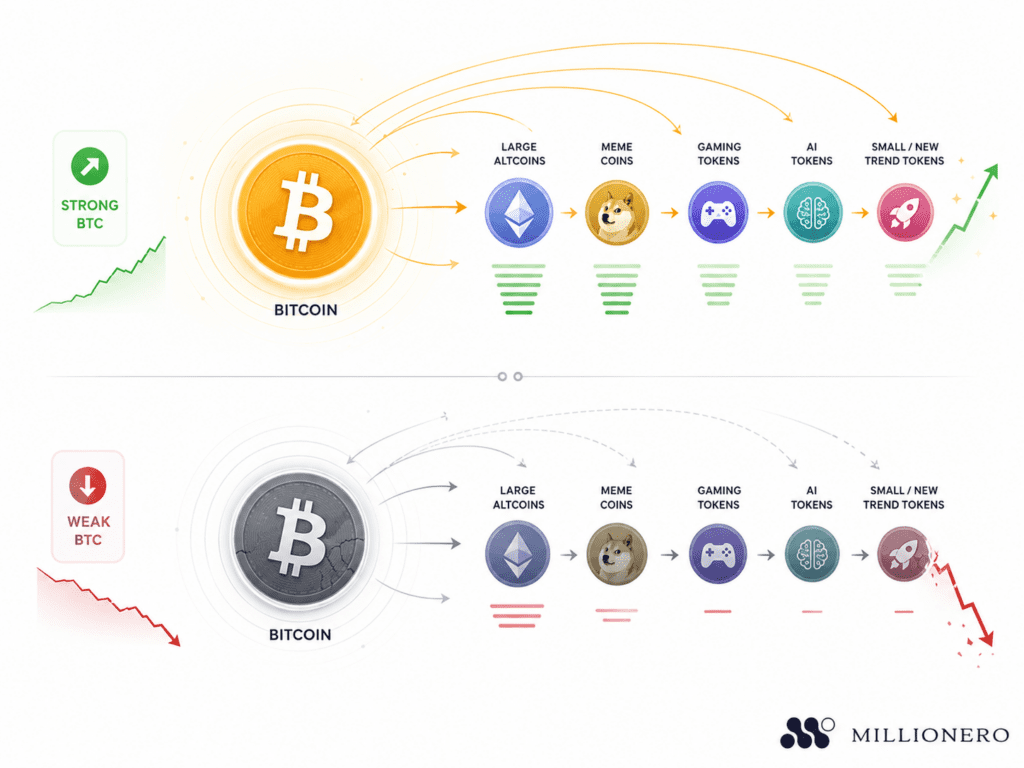
This is why a beginner trading a small token still needs to watch Bitcoin’s larger trend. That token may have its own community, story, and chart, but it usually moves inside the wider market climate.
What a Bull Market Feels Like
A bull market feels alive. Prices rise for weeks or months. Dips get bought quickly. A coin falls for a short time, then buyers return with confidence. Social media becomes louder. New traders enter the market. Stories move fast.
This kind of market creates energy. Traders begin to feel sharper with every winning trade. Some confidence helps, because a bull market rewards action and timing.
The danger begins when confidence becomes careless. Beginners may chase coins after large pumps, use too much leverage, or enter trades without an exit plan. In a rising market, mistakes can stay hidden for a while because momentum covers them. The weakness appears when the cycle slows down.
A healthy bull-market mindset is calm participation. Traders watch the larger trend, control position size, take profit when their plan is reached, and avoid treating every green candle as a fresh invitation.
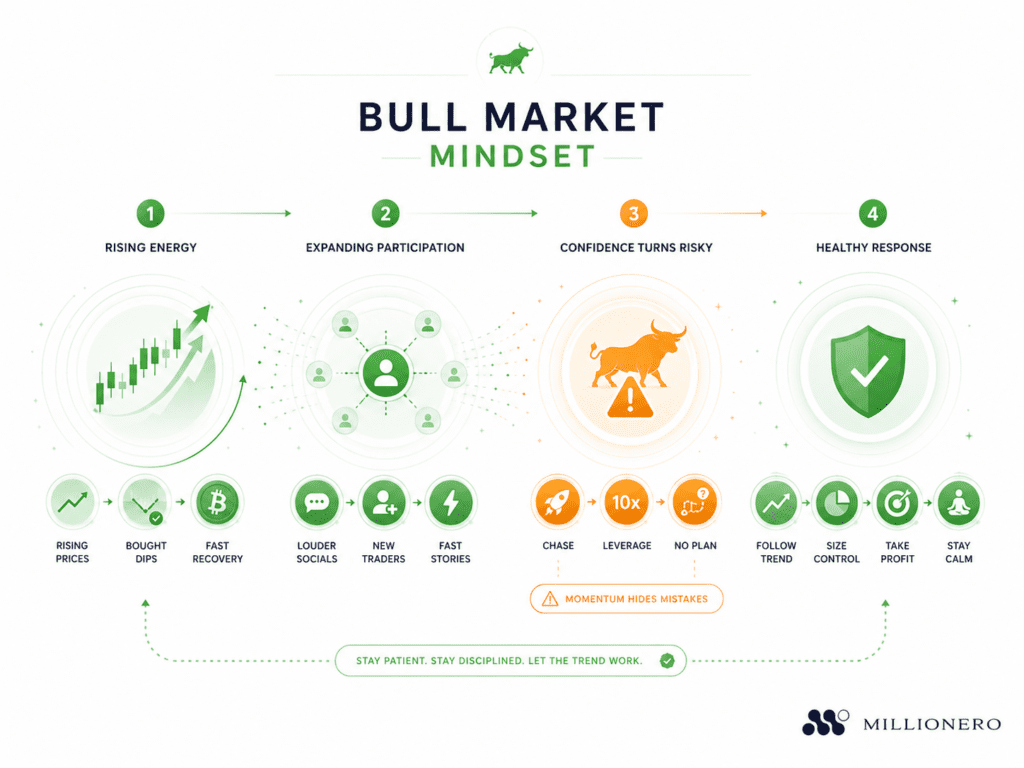
In a Bull Market, Traders Manage Greed
A bull market can make every opportunity feel urgent. The stronger approach is simple:
- Enter with a plan
- Respect position size
- Take profit before excitement takes control
- Avoid chasing candles after a major move
The market may be generous, but discipline keeps gains from turning into lessons.
What a Bear Market Feels Like
A bear market feels heavier. Prices fall. Rallies fade. Excitement disappears. A coin may rise for one or two days, then lose the move quickly. Good news may create a short pump, but sellers return.
For beginners, this can feel personal. A portfolio that once looked promising begins to shrink. Tokens that filled social media become silent. Influencers change topics. Communities become defensive. The market becomes quiet, and that quiet can feel colder than the fall itself.
Bear markets create a different kind of mistake. Some traders sell in panic after most of the damage has already happened. Others keep buying weak coins because the price looks “cheap.” Some try to recover losses with risky leverage. In a weak market, desperation becomes expensive.
A healthy bear-market mindset is survival and study. Traders reduce risk, protect capital, follow stronger assets, and learn why some projects keep building while others disappear. A bear market gives beginners space to understand market structure without the noise of constant hype.
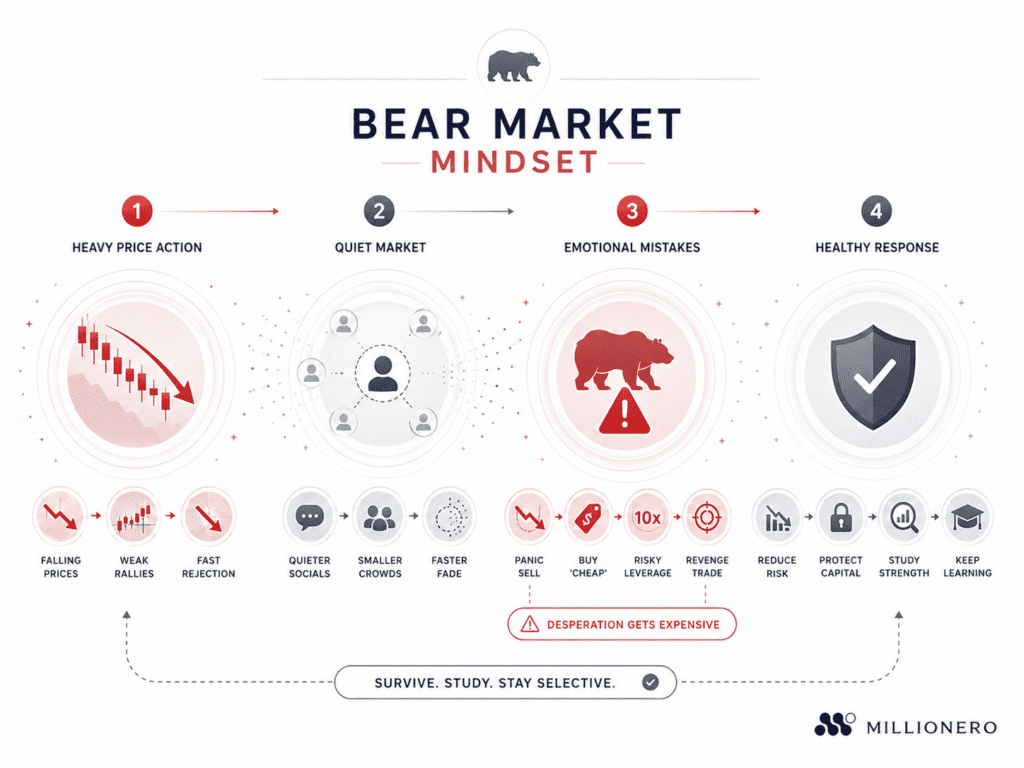
In a Bear Market, Traders Manage Fear
A bear market rewards patience. The stronger approach is:
- Protect capital
- Avoid revenge trades
- Study stronger assets
- Treat “cheap” prices carefully
- Use quiet periods to improve skill
Bear markets test plans. They also reveal which traders are learning and which traders were only following noise.
Why Bull and Bear Markets Happen
Crypto cycles are driven by money, attention, and emotion.
When people feel confident, they take more risk. They buy Bitcoin, altcoins, and newer crypto themes. Rising prices attract more attention, and attention brings more buyers.
When people feel uncertain, they become careful. They may sell risky assets, hold more cash, or wait for clearer conditions. Fear spreads quickly when prices fall, especially in crypto, where leverage and fast reactions can make moves sharper.
The wider economy also matters. When people feel financially comfortable, risk assets often get more attention. When people worry about inflation, interest rates, jobs, war, or recession, crypto can struggle because traders become less willing to take risk.
Easy confidence helps bull markets grow. Fear and caution help bear markets last.
How to Know Which Market You Are In
One green day does not make a bull market. One red day does not make a bear market.
A bull market usually shows higher highs, higher lows, stronger recoveries, and growing interest across the market. Bitcoin often leads, large altcoins follow, and smaller tokens begin to move after attention spreads.
A bear market usually shows lower highs, lower lows, weak rallies, falling volume, and weaker altcoin performance. Good news has less power. Bad news spreads faster. Traders become defensive.
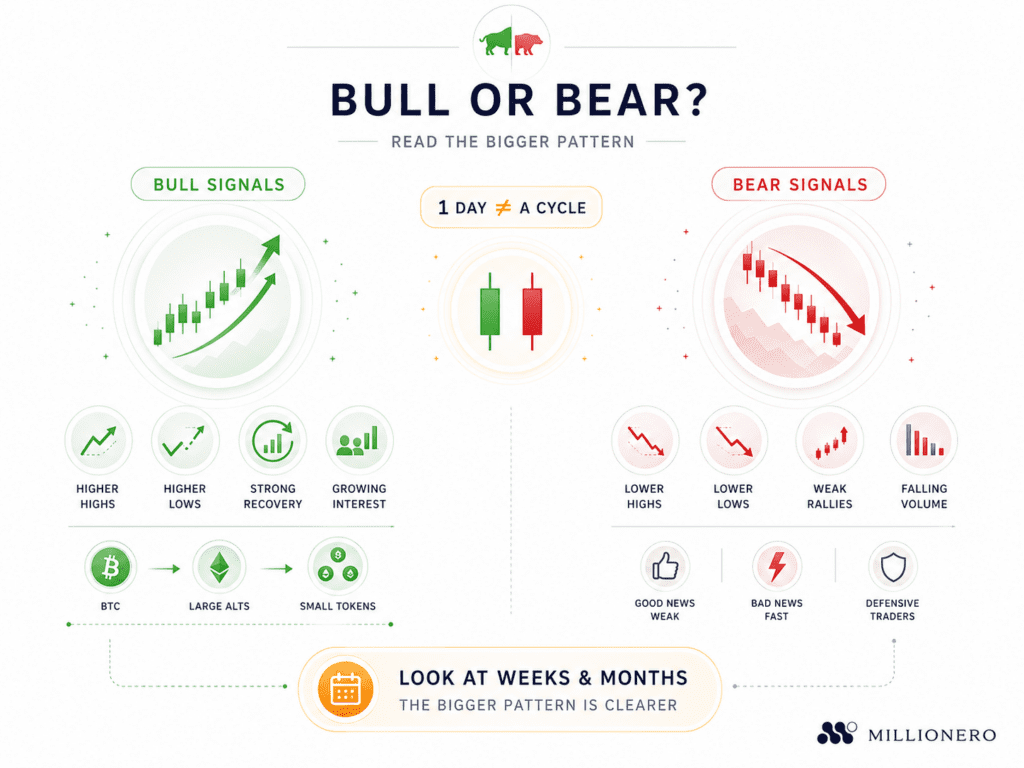
Beginners should look at weeks and months, rather than one candle. The bigger pattern gives a clearer answer than the emotion of a single day.
Final Thoughts
Bull and bear markets teach different lessons.
A bull market teaches traders how to handle excitement. A bear market teaches traders how to handle fear. One rewards confidence. The other rewards patience. Both shape better traders when the cycle is understood.
For beginners, the goal is to stop reacting blindly to every move. Bitcoin often gives the first signal, the wider crypto market follows, and trader behavior changes with the trend.
The market will always move between confidence and fear. A better trader learns to recognize the season before choosing the strategy.
Millionero Ending
Crypto markets move in cycles, and every trader should understand the environment before making decisions. This article is for educational purposes only and is not financial advice. Always do your own research, manage your risk carefully, and keep learning through the Millionero blog. When you are ready, you can trade crypto spot and perpetuals on Millionero.